



posted 5th October 2026
If you’re arranging electrical work for a pub, you’ll want to know how it will fit around the business. Opening hours, the people using the building and the possibility of further work all need thinking through.
At this Winchester pub, those practical considerations went hand in hand with a demanding inspection. Years of alterations had left a lot of wiring to trace, with multiple supplies serving the commercial and domestic parts of the property.
With both the installation and the business to consider, we arranged the commercial electrical installation condition report (EICR) around the pub’s working hours. The findings became the starting point for a full rewire, with consultation, electrical design and a programme of works that helped avoid significant closure.
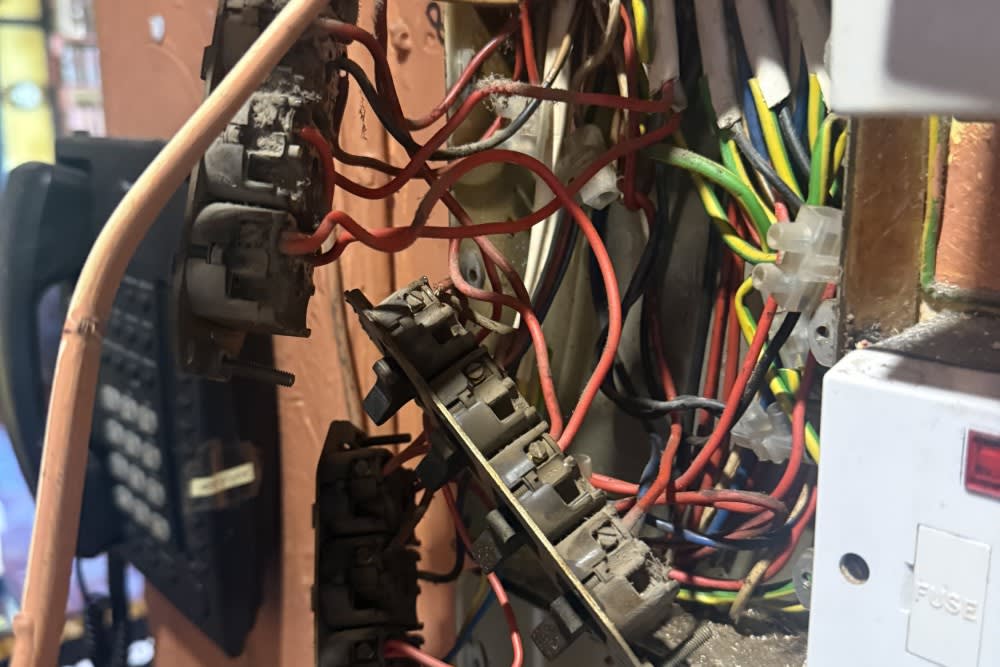
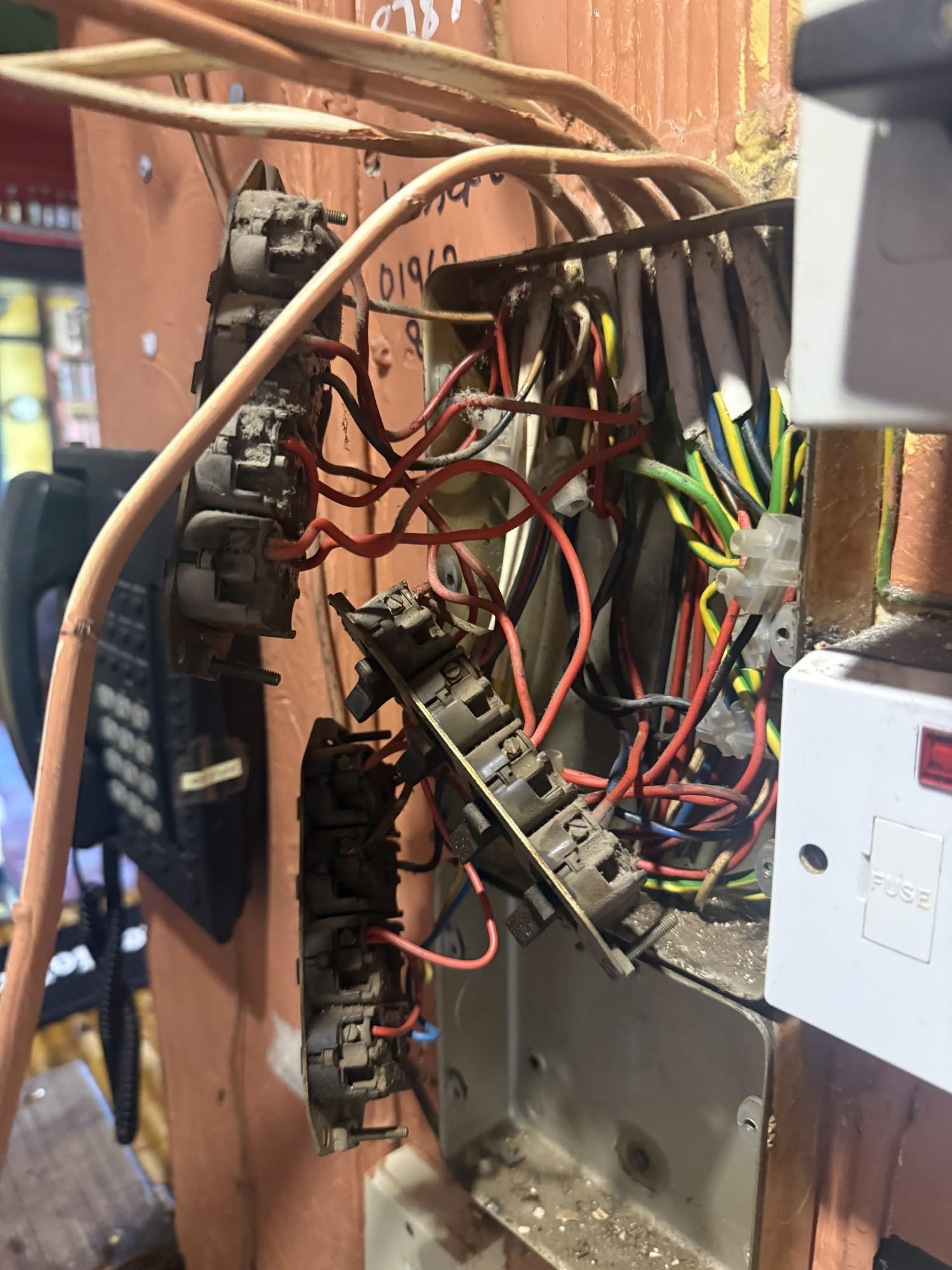
Wiring behind the pub’s switches, photographed before replacement.
Getting to know the installation
An older pub can hold decades of electrical alterations, and this one took careful investigation to understand. Many of the older fuse boards were unlabelled, so establishing what each circuit supplied required extra time and care.
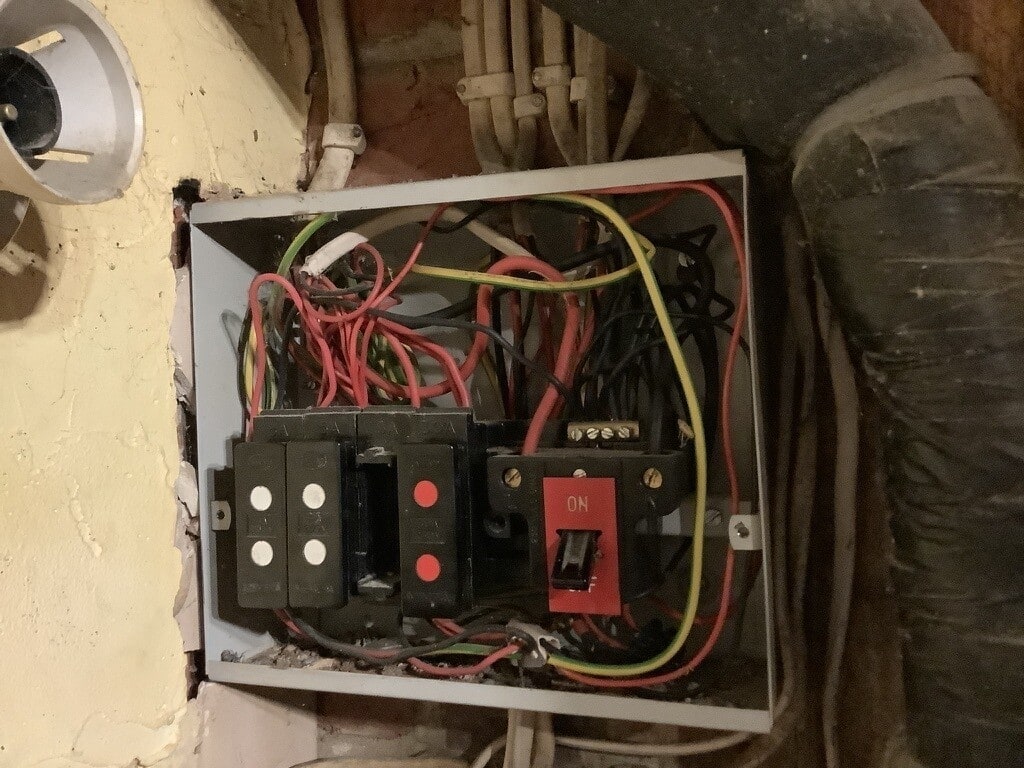
One of the older boards encountered while tracing the pub’s electrical installation.
The layout added to that challenge. The position of a fuse board did not reliably indicate which rooms or parts of the premises it served. Circuits and supplies crossed between areas, so we needed to establish those relationships carefully.
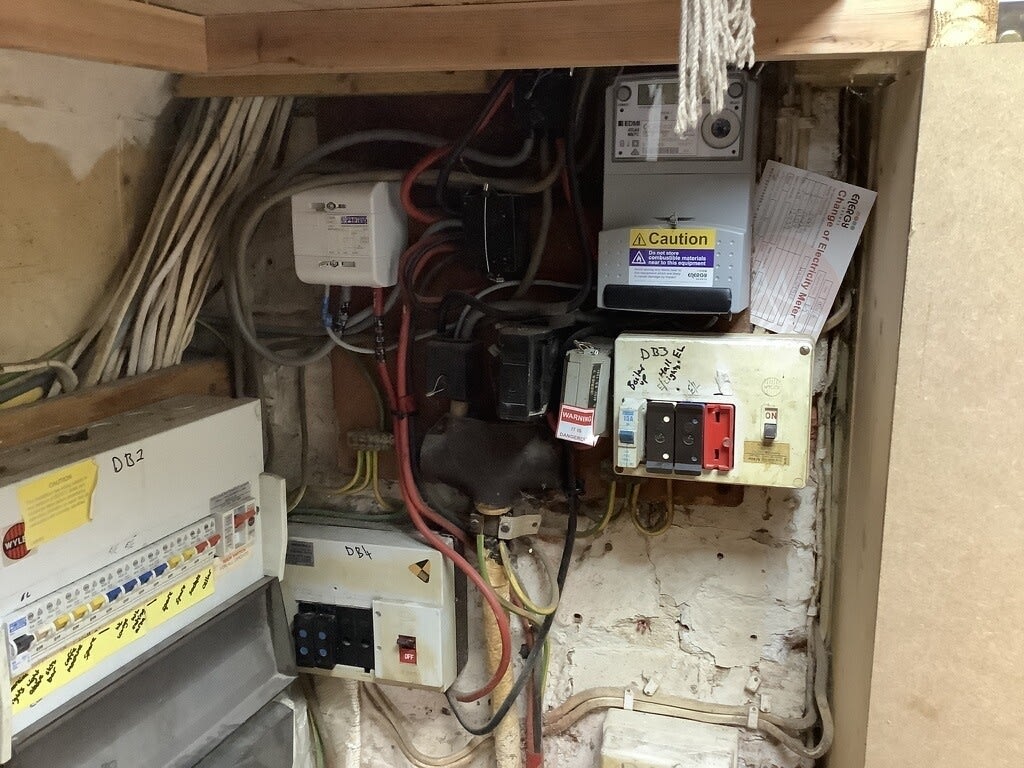
Working through those supply arrangements helped us build a picture of how the installation fitted together: the different supplies, the areas they served, the circuits connected to each board and the protective equipment in use. That understanding was an important part of the inspection and gave us a sound starting point for the replacement design.
A wider view of the pub’s existing boards and supply equipment.
What the inspection revealed
This was an extensive commercial EICR, with numerous findings across the pub’s installation. Understanding the extent of the work needed meant looking closely at the condition of the equipment and considering what the electrical test results told us.
More generally, an EICR assesses the safety of an installation against the relevant requirements of BS 7671, the Wiring Regulations. Among the issues we check for are:
- Loose or poorly made electrical connections.
- Damaged or deteriorating cabling, including rodent damage.
- Worn or damaged switches, sockets and other accessories.
- Incompatible or unsuitable fuses and circuit breakers.
- Signs of overheating or thermal damage.
- Electrical equipment unsuitable for its surroundings.
- Missing or unsuitable residual current device (RCD) protection where required.
- Missing or inadequate earthing and protective bonding.
At this pub, the findings included loose connections, deteriorating cabling, rodent damage and worn accessories, alongside incompatible protective equipment and signs of overheating. Some of the older switchgear itself was constructed of wood. The photographs illustrate a few of these findings and help explain why they mattered.
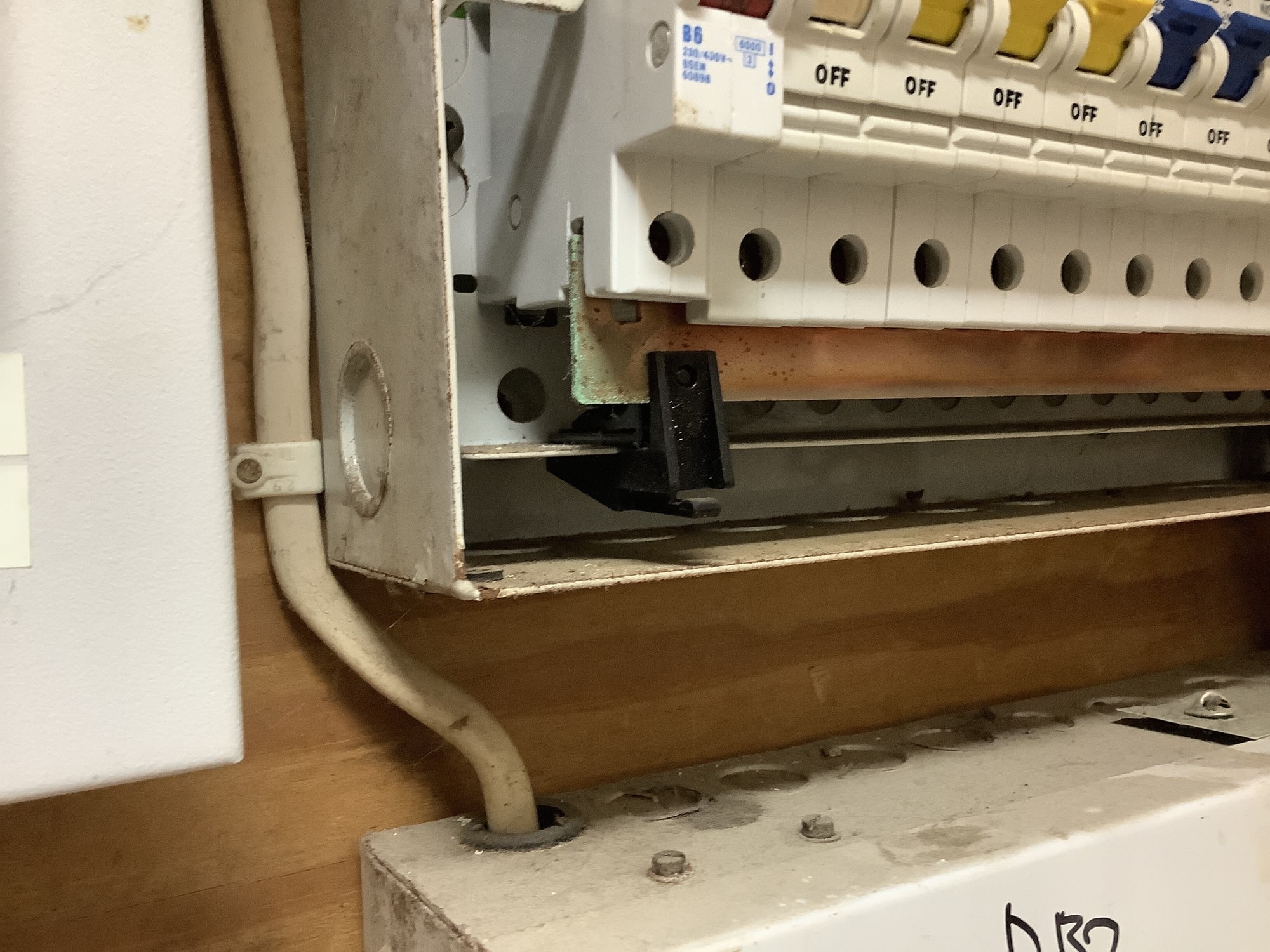
The incompatible breaker made an incorrect busbar connection, where signs of heating were identified.
The close-up of the circuit breaker and busbar shows an example of incompatible equipment. The breaker was unsuitable for that particular distribution board and made an incorrect connection to the busbar, the metal conductor supplying the breakers. There were signs of heating at the connection, presenting a potential fire risk. It showed why we examine how equipment has been fitted and connected, as well as testing the circuits.
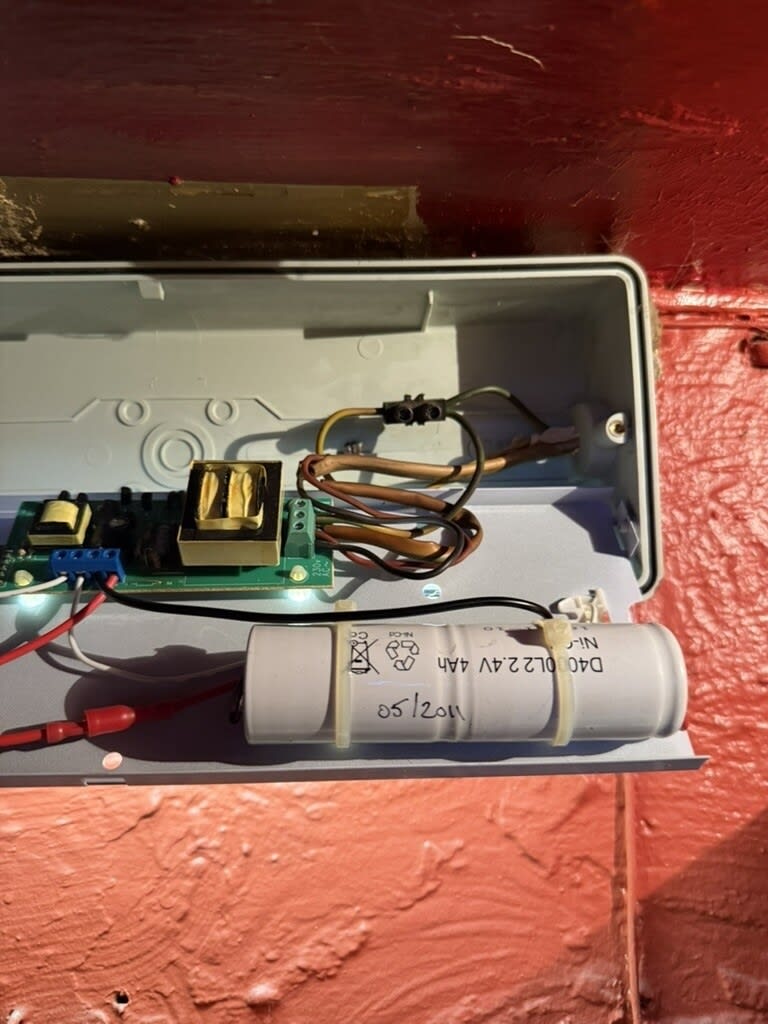
Thermal damage was identified at the connections, conductors and surrounding parts of the emergency light.
The emergency-light photograph shows thermal damage inside the fitting, affecting its connections, conductors and surrounding parts. This was another finding considered as part of the wider assessment of the installation.
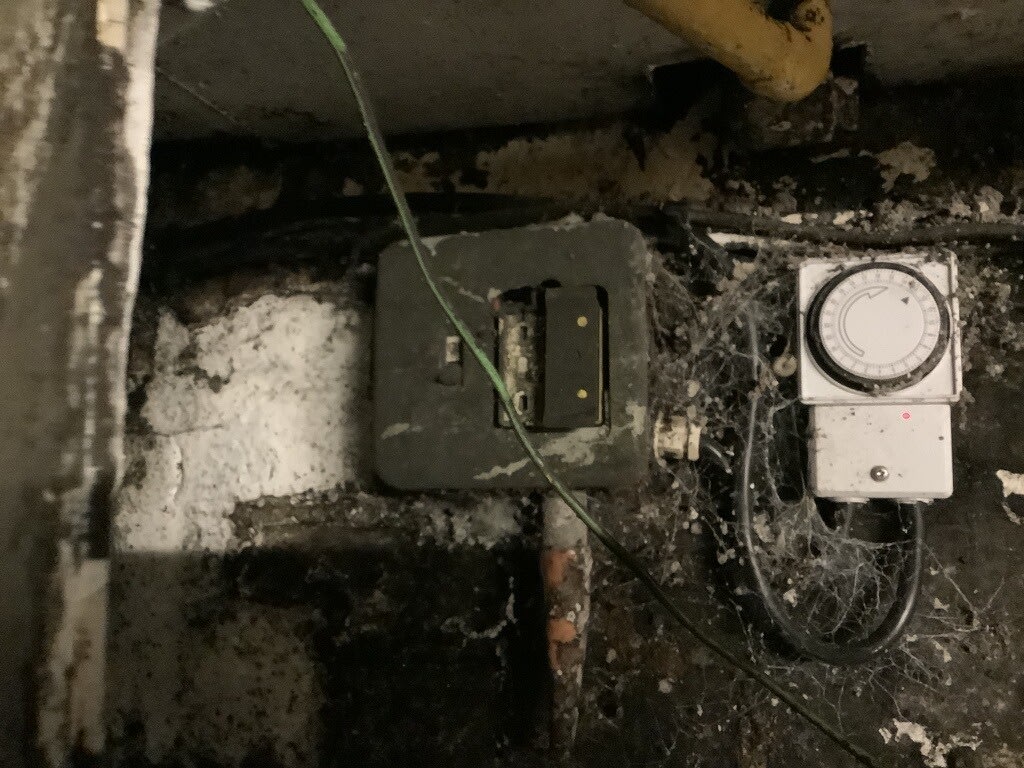
The switch and timer were in poor condition, with foreign material getting into equipment unsuitable for its environment.
The photograph of the old switch and timer shows equipment in very poor condition. Foreign material had been getting inside, and the equipment was unsuitable for its surroundings.
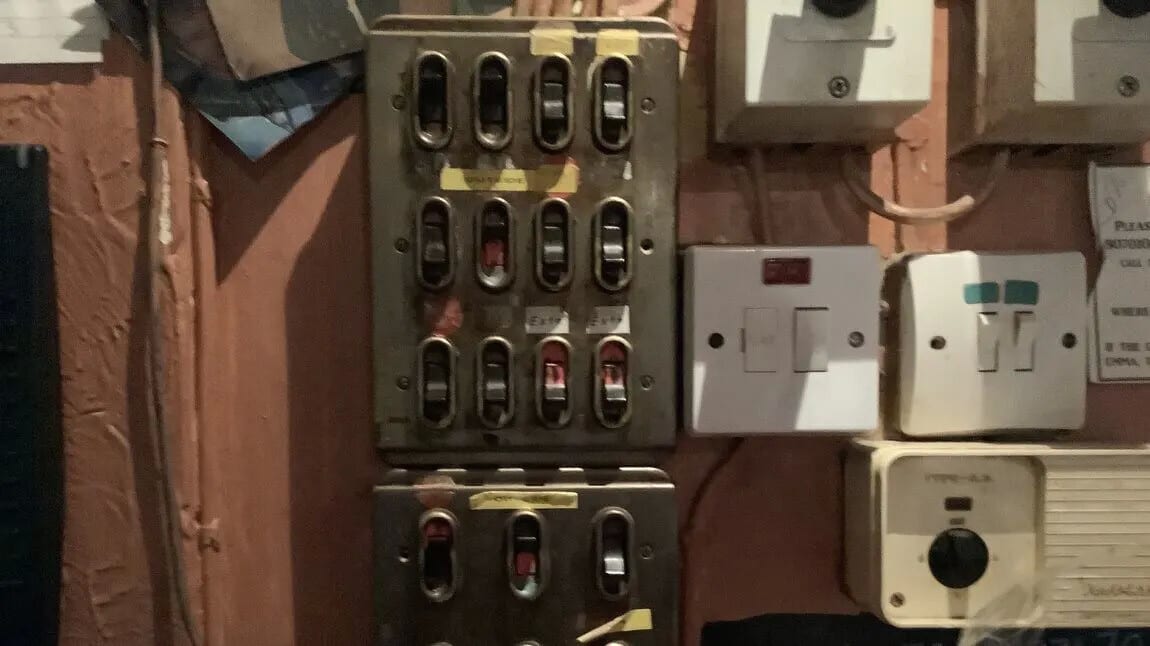
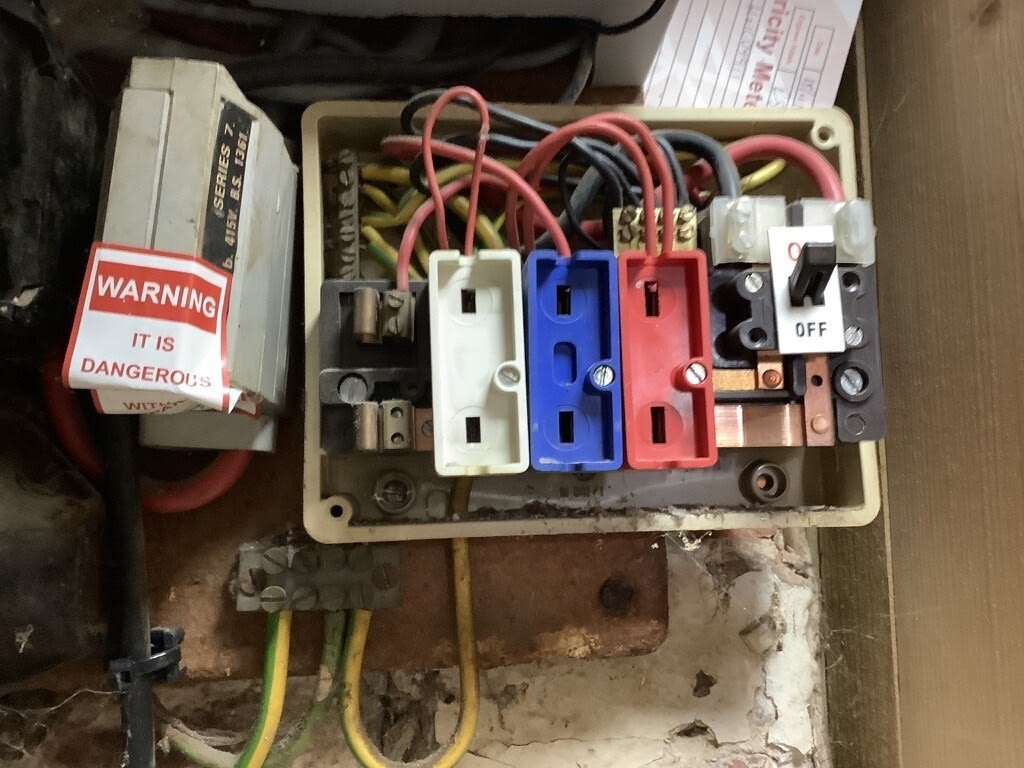
Older fuse equipment encountered at the pub before the replacement installation.
Making sense of the findings
Some of the fuse equipment at this pub was more than 40 years old, but age alone does not decide whether a building needs rewiring. Its condition and suitability need to be assessed.
At this Winchester pub, the findings of our commercial EICR led to a full rewire. At other premises, an electrical installation condition report may identify a need for electrical repairs, improvements or further investigation.
We want the report to give you a clear basis for discussing what happens next. That means explaining the findings and the reasons behind the recommendations, so you can understand why work is being proposed and plan how to take it forward.
Older protective equipment before replacement. All photographs in this article show the installation before the rewire.
A plan for the building and the business
The replacement needed to provide a functional, compliant installation for both the pub and its domestic areas. We also needed a programme for changing the existing infrastructure while the premises remained in use.
We carried out thorough consultation, prepared the electrical design package and developed the programme of works. We then completed the full rewire without significant closure of the pub.
You can see how the design, planning and rewire came together, with photographs of the completed installation, in our Winchester pub rewire project.
Planning an inspection at your premises
Every installation has its own history, and every business has its own requirements for electrical testing. We take time to understand both. A useful conversation about an EICR should cover how you use the building, what concerns you have and how an inspection can be planned around the people working there.
We can price by circuit, and we will always endeavour to carry out a site survey. This gives us the opportunity to look at the installation with you, discuss the scope of the inspection and identify practical requirements early. A circuit count helps with pricing; understanding the premises helps us plan the work properly.
At the survey, we discuss opening hours, convenient times for testing, any necessary shutdowns and the areas or activities that could be affected. We also talk through special arrangements for systems such as fire alarms. Some tests require isolation, so agreeing these details in advance gives you time to prepare and lets us shape the inspection around your requirements.
Previous reports, circuit schedules or plans can help us understand the installation. If you don’t have them, you can still get in touch and tell us what you know about the building.
If you also need emergency-lighting checks, we can discuss that scope with you. An EICR includes the relevant fixed wiring and supplies; a complete operational test of the emergency-lighting system is separate.
Talk to us about your building
You don’t need to know exactly what is wrong with an installation before asking for advice. Whether you have an inspection coming up or concerns about older electrics, we’d be happy to hear about the property and what you need to work around.
Chase Farm Electrical is an NICEIC Approved Contractor, with our competence assessed under the scheme and appropriate insurance for the work we undertake. We want you to feel confident about both the advice you receive and the people carrying out the work.
We carry out commercial EICRs in Winchester, Southampton and across Hampshire. Tell us about your premises and we can discuss the inspection, the practical arrangements and a quotation.

