



posted 5th October 2026
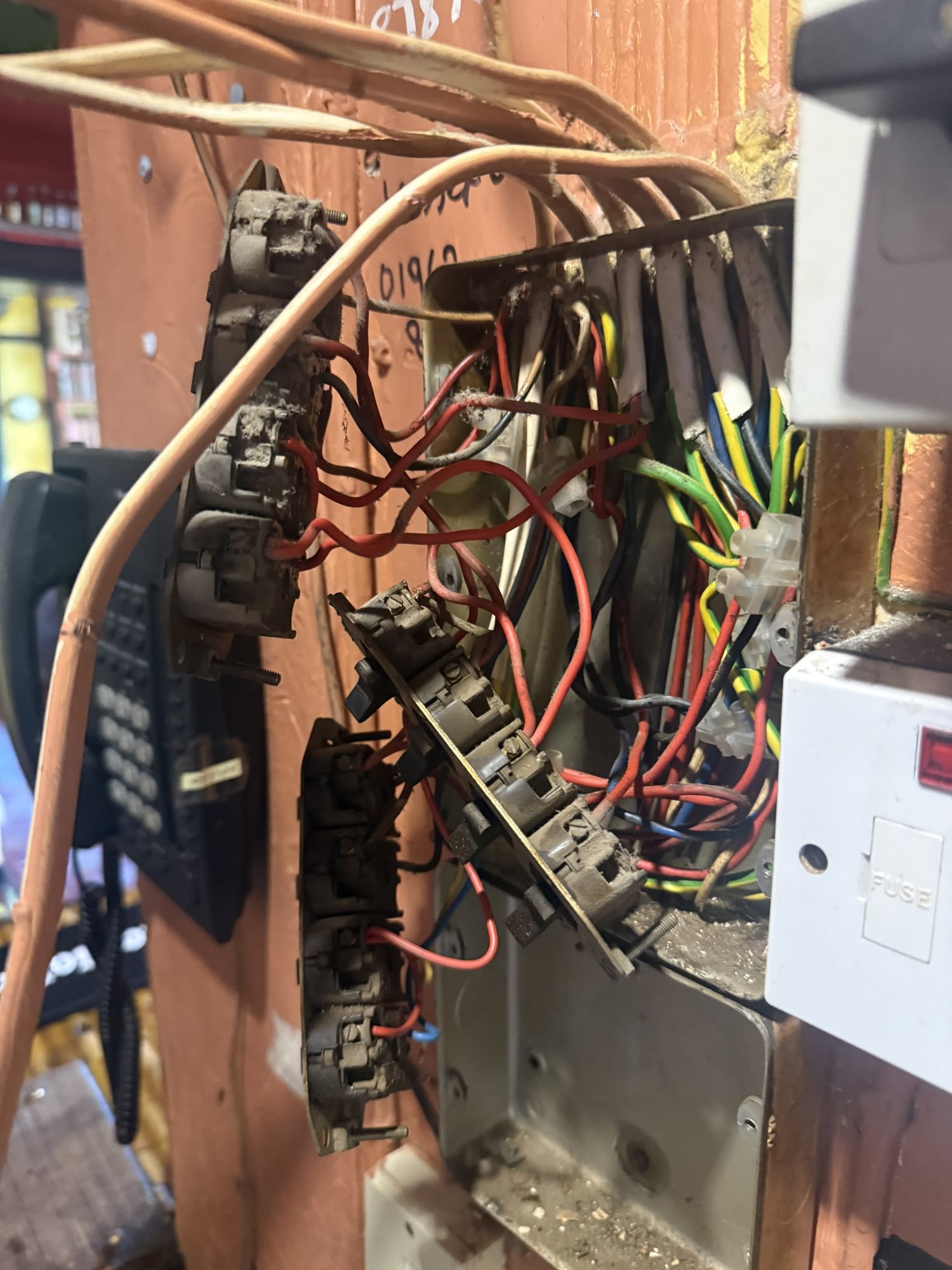
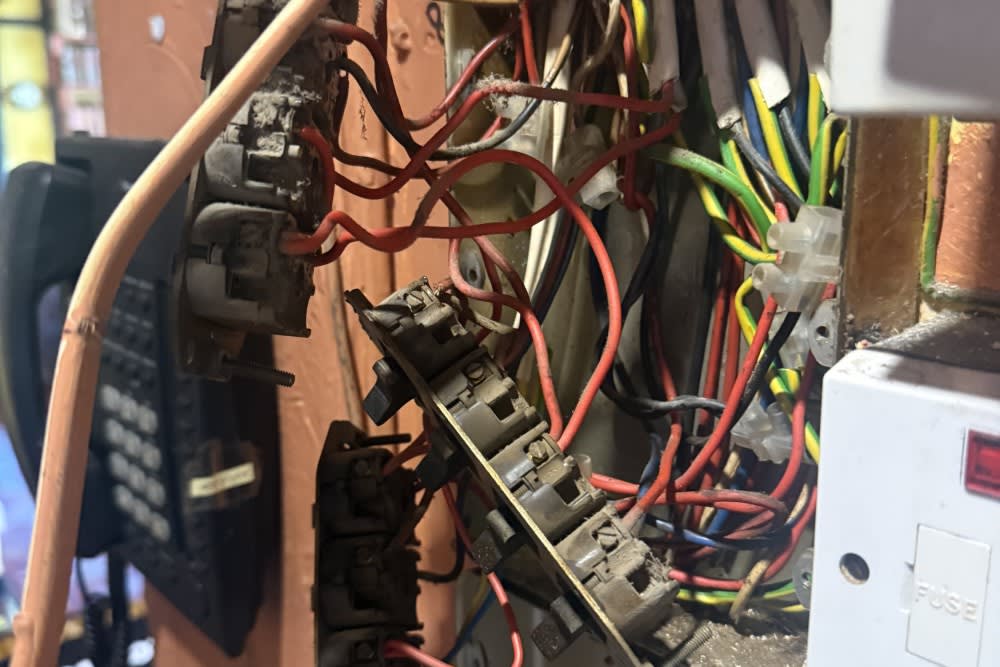
A look behind the pub’s switches during the inspection, before the rewire.
Behind the switches: a Winchester pub’s commercial EICR
Years of alterations, multiple electrical supplies and a pub that needed to keep trading: this commercial EICR in Winchester brought all three together.
Our Electrical Installation Condition Report involved tracing the wiring across the pub and its domestic areas, with inspection and testing planned around its working hours. Behind the covers, we found heat-damaged connections, an incompatible circuit breaker and equipment unsuitable for its surroundings.
Here’s what we found, why it mattered and how we went on to design and carry out a full rewire, with a programme that helped the pub stay open.
A working Winchester pub
Inspection and testing had to fit around the pub’s working hours, across both commercial spaces and domestic areas.
Years of wiring to untangle
Multiple sources of supply and years of alterations made tracing the installation a substantial part of the job.
From EICR to full rewire
The findings led to a new electrical design and full rewire, with a programme that helped the pub stay open.
Planning an EICR around a pub’s working hours
For this pub, access to both the business and domestic areas had to fit around its working hours. With multiple supplies and years of changes to trace, understanding how the building was used mattered alongside understanding the wiring.
Some electrical tests require supplies to be isolated. If you’re arranging a commercial EICR, tell us your normal opening hours, which areas are occupied, when we can access them and anything that could be affected by an interruption to the supply. That helps us discuss suitable arrangements before the visit.
Previous inspection reports, circuit schedules or electrical plans can also be useful if you have them. If you don’t, just tell us what you know about the property and we can talk through what’s needed.
The aim is to agree the inspection scope and practical arrangements before work starts. Our electrical testing and inspection in Winchester page explains more about the service.
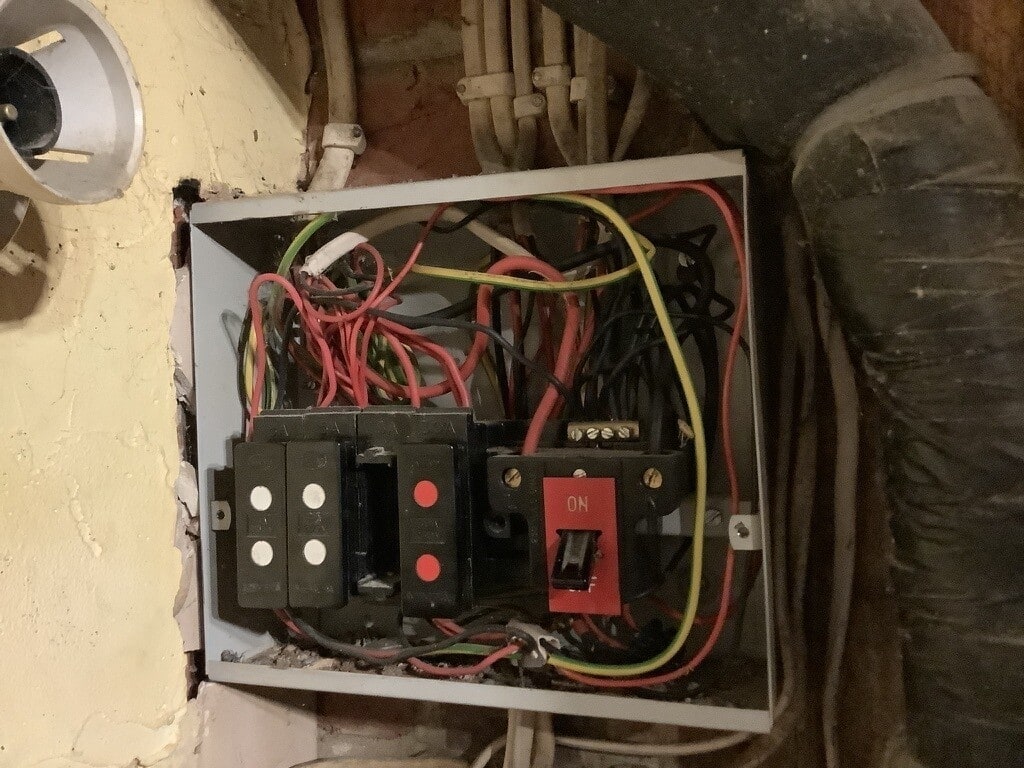
One of the older boards encountered while tracing the pub’s electrical installation.
Working out what supplied what
Over the years, alterations and additional wiring had left different parts of the installation to trace. Multiple sources of supply made that more involved: we needed to establish how the commercial and domestic areas were supplied and how the changes related to one another.
The wiring inside this older board gives a closer view of the arrangements we encountered. It was part of a much wider installation, with equipment from different periods serving different parts of the property.
Tracing those connections helped us understand the installation before assessing its condition. For a pub with years of changes behind it, that investigation is an important part of commercial electrical inspection and testing.
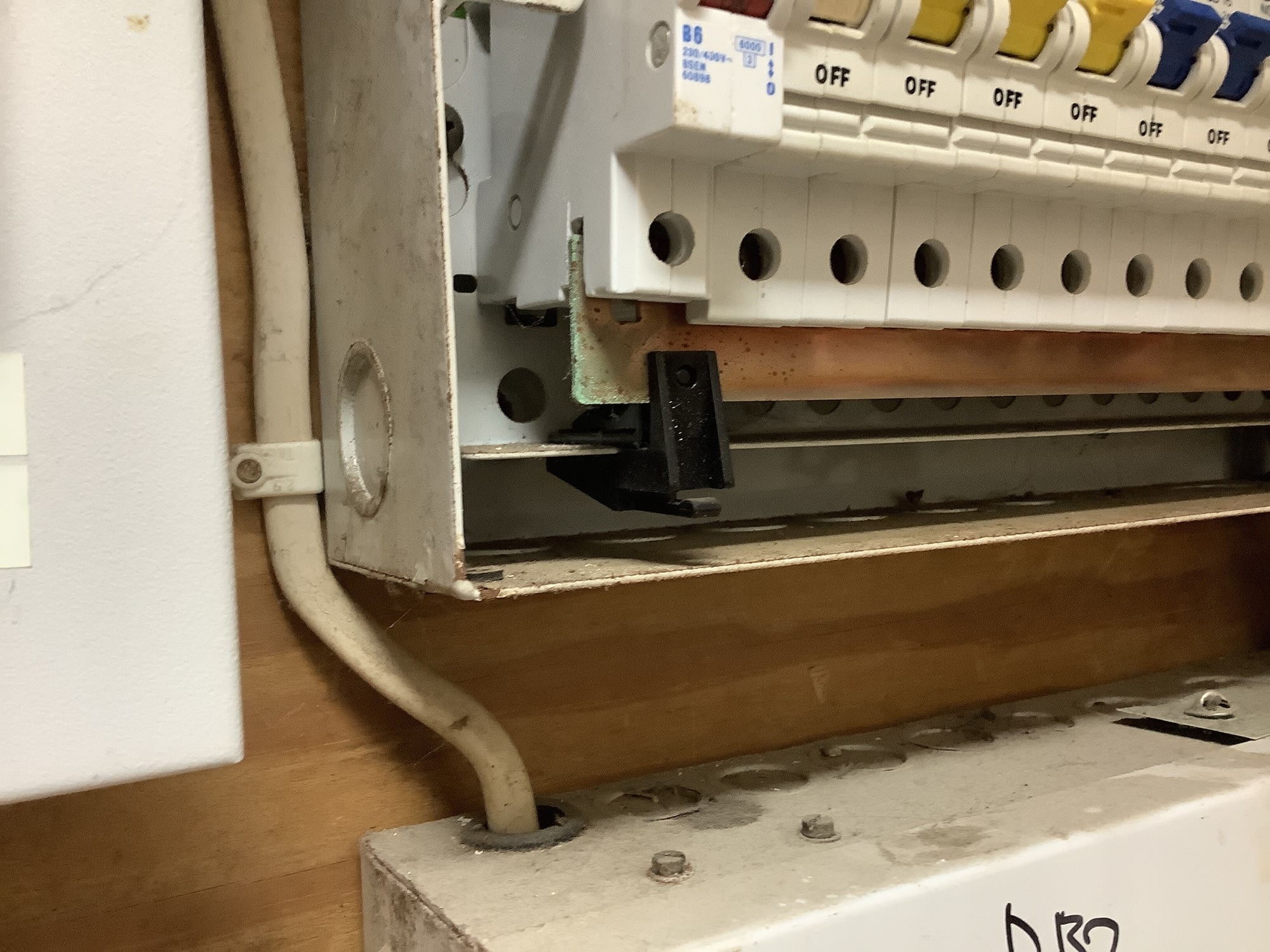
The incompatible breaker made an incorrect busbar connection, where signs of heating were identified.
Hidden danger at a busbar connection
One of the more concerning findings was inside this distribution board. A circuit breaker from the wrong brand had been fitted: it was incompatible with the board and made an incorrect connection to the busbar.
The busbar is the copper strip that supplies the circuit breakers. At this connection we found signs of heating, creating a potential fire risk that needed attention. This was more than a question of whether a breaker could physically fit in the space. It needed to be suitable for the board and connected correctly.
This is where a careful visual inspection makes a difference. With the cover in place, a customer cannot see the condition of these internal connections. Checking the equipment inside helps reveal problems that need assessing alongside the electrical test results.
For the pub, this finding formed part of the wider picture behind the decision to rewire. It also shows why an EICR involves both inspection and testing.
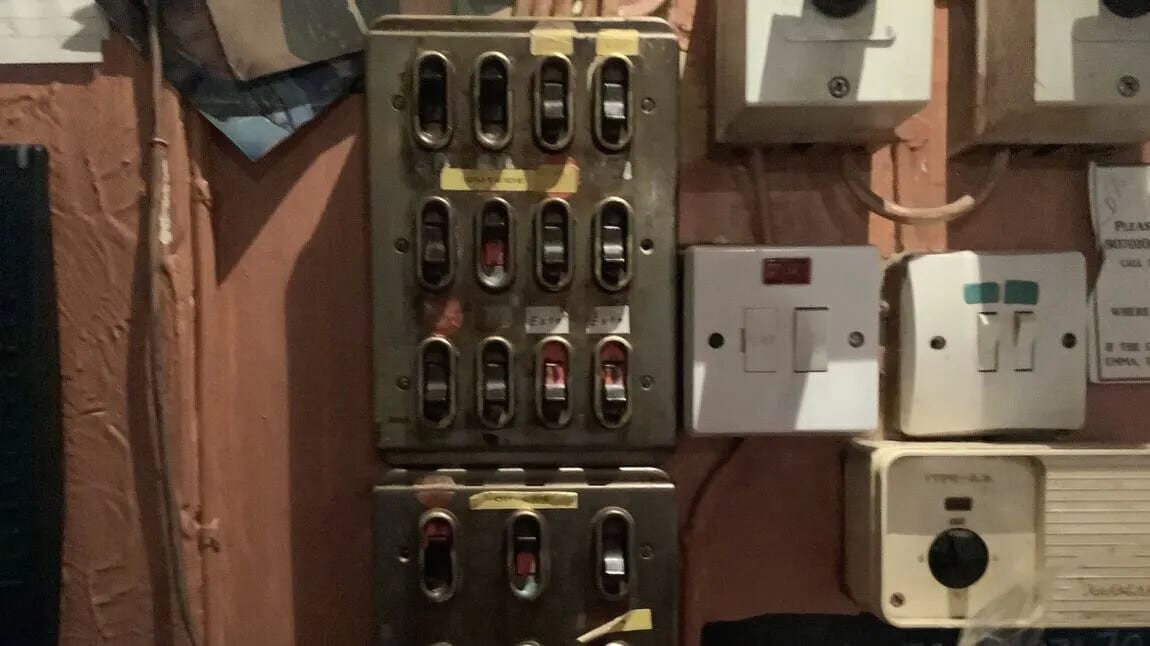
Older fuse equipment encountered at the pub before the replacement installation.
Older fuse equipment: looking beyond its age
The older boards in this photograph were another part of the pub’s electrical history. Some of the fuse equipment we encountered was more than 40 years old, with later additions elsewhere in the installation.
That mixture made it important to establish how the different parts were connected and which circuits they supplied. Understanding an installation that has grown over time takes more than identifying the newest board on the wall.
An old fuse board does not automatically mean a property needs rewiring. Its condition and suitability still need assessing through inspection and testing. On this job, the full rewire followed the range of concerns across the installation, rather than the age of these boards alone.
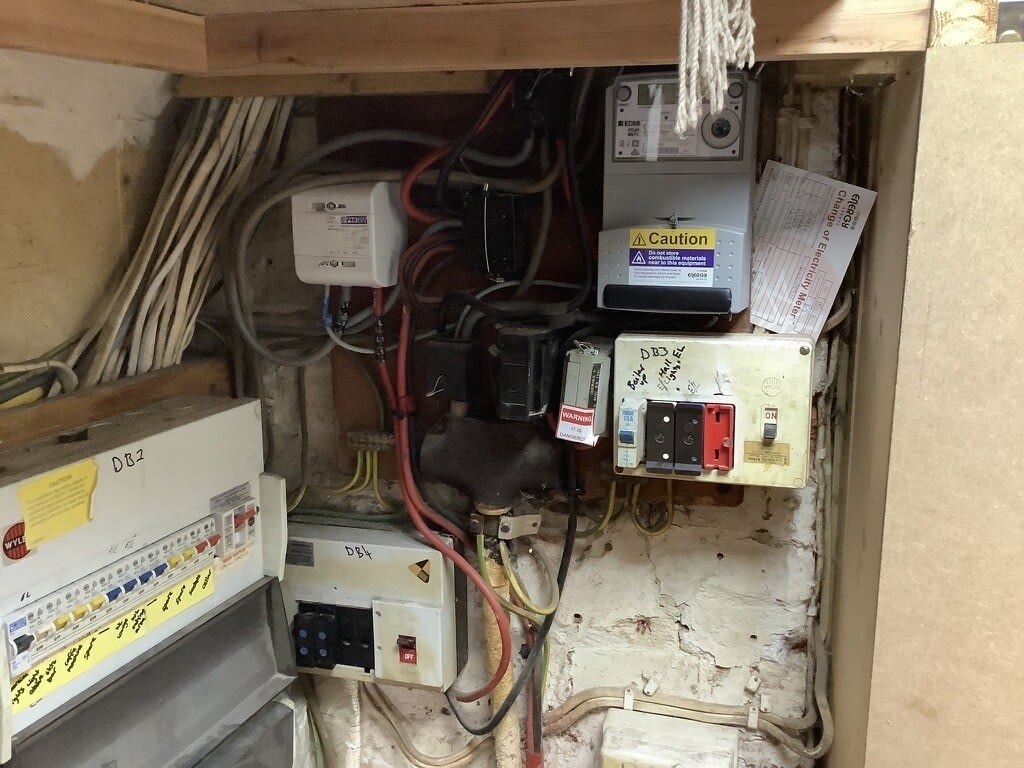
The mixture of protective and supply equipment inspected before the pub’s rewire.
Why the right fuse protection matters
The overview photograph shows the mixture of fuse boards, switches and supply equipment we had to assess. Each protective device has a job to do, and the installation relies on those devices being suitable for the circuits they protect.
A fuse protects against excessive current by disconnecting the circuit when its element melts. A circuit breaker uses a different mechanism, but its selection and connections are just as important. The correct type and rating help protect the circuit’s wiring against overloads and short circuits.
Incorrect protection or a poor connection can allow wiring or equipment to overheat. The busbar finding on this job was a clear example of why the detail inside a board matters. Simply seeing a fuse or breaker in place is not enough to assess its suitability.
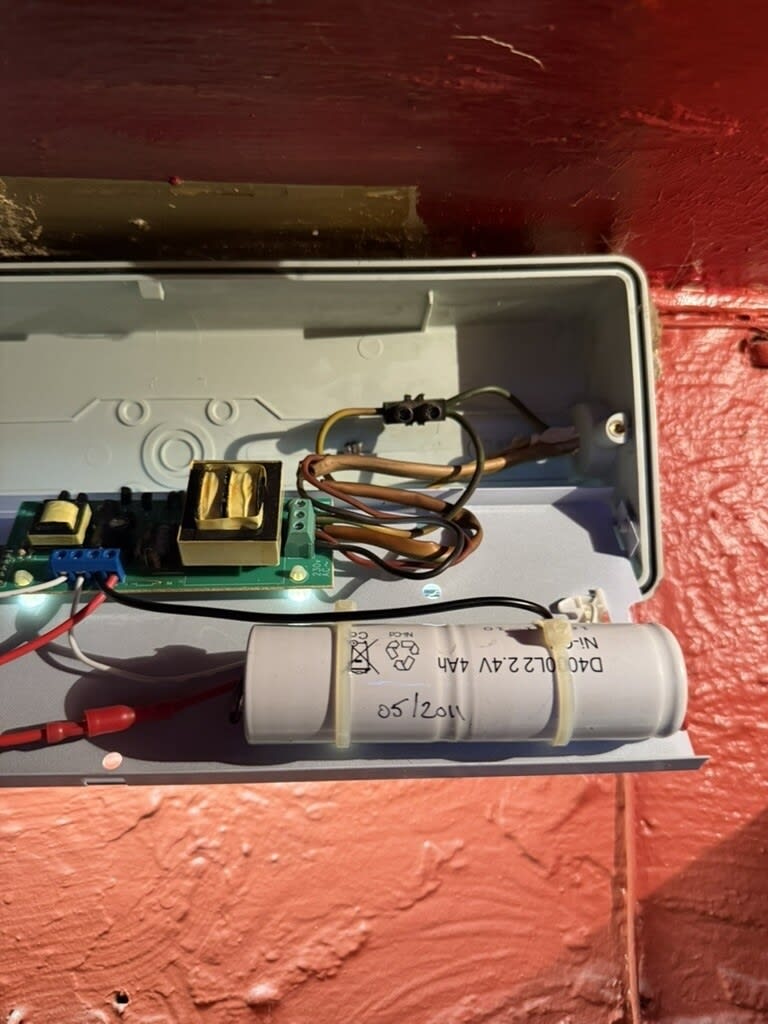
Thermal damage was identified at the connections, conductors and surrounding parts of the emergency light.
Thermal damage inside an emergency light
Inside this emergency light, we found thermal damage affecting the connections and conductors, as well as the surrounding parts of the fitting.
The photograph shows the wiring, battery and other components inside the light. Looking inside gave us a closer view of the areas affected by heat, which needed attention as part of the wider electrical work.
Emergency lighting also needs its own inspection and testing. An EICR assesses the fixed electrical installation, so the scope of any emergency-lighting checks should be agreed separately when planning the visit.
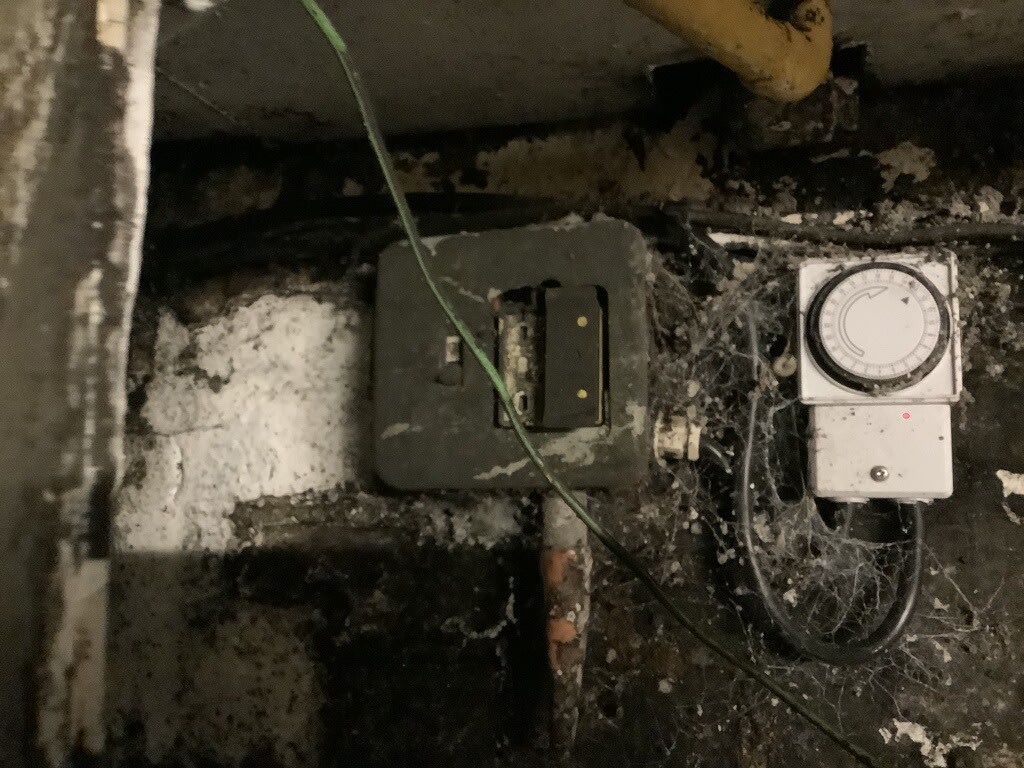
The switch and timer were in poor condition, with foreign material getting into equipment unsuitable for its environment.
An old switch and timer in the wrong environment
The old switch and timer shown here were in very poor condition, with foreign material getting into the equipment. It was also unsuitable for the environment in which we found it.
This was a different kind of concern from the heat damage in the emergency light. Here, the condition of the equipment and its surroundings both mattered. Electrical equipment needs to be suitable for where it is installed, as well as for the job it is meant to do.
It was another example of why we needed to assess the installation as a whole. Different items of equipment raised different concerns, and the report brought those findings together.
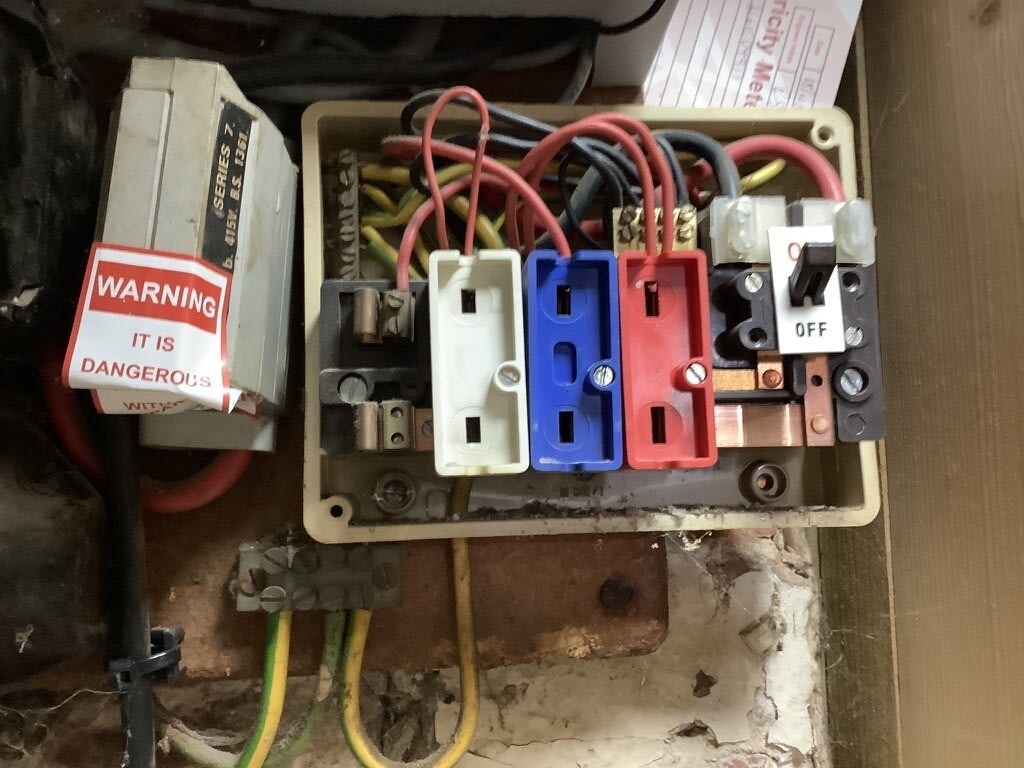
Older fuse equipment seen during the inspection, before the rewire.
From the EICR to a full rewire
The concerns identified across the installation led to a full rewire. After carrying out the EICR, we prepared the electrical design and the programme of works, then carried out the replacement installation.
Keeping the pub open was an important part of organising that work. The programme took its operation into account and helped the premises remain open during the rewire.
A full rewire was the response to the findings on this particular job. An EICR does not automatically mean rewiring: the next steps depend on the condition found and any repairs or further investigation needed.
The photographs here show the installation before the replacement work.
Planning a commercial EICR in Winchester?
If you look after a pub or other commercial property, we’d be happy to talk through the inspection with you. Tell us about the premises and your working hours, and we can discuss access, the work involved and a quotation.
We carry out commercial EICRs in Winchester, Southampton and across Hampshire. Reports are issued within 24 hours of the inspection.
Explore our commercial EICR service, use the quotation button below or call us on 07813 720 204.
This case study follows our own inspection, design and rewiring work. Find out more about Chase Farm Electrical.

